
Material Techno-Economics
Electrons, Molecules & AI / QubitsClimbing the Competitiveness Ladder
Strategy, sustainability, competitiveness, economics, regulations & the energy transition in materials
Molecules, electrons, AI / qubits & the economics of change.
Independent advice from Zurich for boards, investors and policymakers on where electrons, molecules and biology create the most value and the strongest competitiveness in the energy transition. Built on 25 years of chemical-industry P&L, strategy and economics.
A code red for humanity
That is how UN Secretary-General António Guterres described the IPCC's 2021 climate report. The science has only become clearer since.
A world under tension
Wars, trade fragmentation and energy shocks have turned the transition into a question of security of supply and competitiveness too.
Get it right
More than ever, we need to get the energy, electricity and materials transition right: the right molecules and electrons, in the right place, at the right cost.
Talks, articles & announcements
Where to hear the work next, and what is new. All news →
Advice where energy, materials and economics meet
Four ways to work together from our base in Zurich, across Europe and beyond: from a single keynote to a board-level strategy programme.
Board & strategy advisory
Portfolio, investment, site and competitiveness choices under energy-transition uncertainty, tested against scenarios.
Techno-economic assessment
Route-by-route cost, carbon, power and water economics for chemicals, materials and hydrogen.
Macro & industrial outlook
Chemicals as an early-warning system for the economy: demand, margins and trade flows.
Keynotes & workshops
The Electricity Ladder and its companions, for executive teams, investors and policy forums.
Three ladders, six currencies
Each ladder ranks industrial and digital demand by cost, carbon, value, water, toxicity and adaptation. It shows what should electrify, what should capture carbon, what should move off-grid, and what should turn to biology.
Where should we use electrons?
A prioritisation and allocation framework. It ranks industrial and digital demand by cost, value creation, abatement potential and water intensity to decide what should electrify, what should pursue alternatives like CCS, and what moves off-grid.
Open the Ladder Scenario Lab → The Renewable Carbon LadderWhere should carbon come from?
Fifteen routes to carbon for chemicals and plastics, from crackers with CCS and e-cracking to recycling, bio-ethylene, bio-naphtha, e-methanol, green methanol and natural (white) hydrogen, plus biomanufacturing and synthetic biology.
Try the Carbon Lab → The Water LadderWhat does the transition drink?
The same technologies mapped by water use per tonne and per MWh. The hidden constraint on electrolysers, data centres and bio-based routes.
Try the Water Lab →Competitive Decarbonization Ladder (Booster)
How many rungs of the Competitive Decarbonization Ladder are decarbonized and competitive today in the Nordics, Germany, France, Italy, Spain and on EU average. This view is password-protected.
Run your own scenario
Set prices for power, gas, carbon, feedstock and water, and see how the ranking changes. Each lab can turn your scenario into a five-slide summary presentation.
Ladder Scenario Lab
Both ladders for Europe against six global competitors: 30 processes × 14 regions scored on cost, carbon, value and water. Includes industrial output in 2040, the hydrogen stream, reality checks, the 2040 prize, today's EU rules versus ladder-optimised rules, and the path to −90%.
Open the Ladder Scenario Lab →Electricity Lab
23 processes across chemicals, metals, minerals, heat, mobility and digital: breakeven power prices and the MWh on each rung.
Open → Lab 2Renewable Carbon Lab
Cost, fossil CO₂, power and water for 15 routes to carbon for chemicals and plastics, now including natural (white) hydrogen and imported green methanol.
Open → Lab 3Water Lab
Annual water use of world-scale assets, water cost and baseline water stress by region.
Open →Rising the Chemicals Ladder
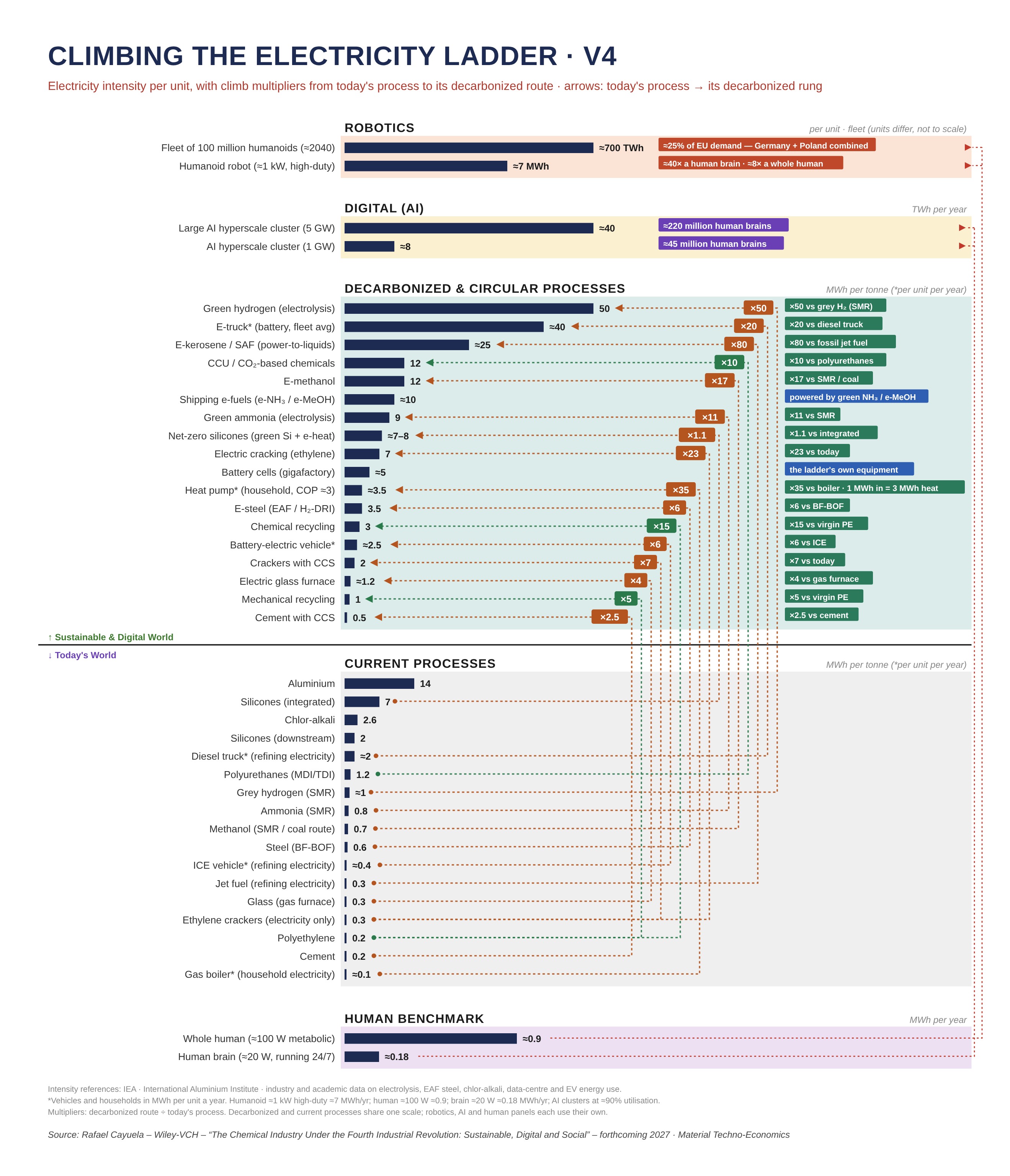
Electricity per tonne for 23 decarbonized and circular chemical routes against today's processes, from green hydrogen (50 MWh/t) and e-olefins (≈30) to recycling and biotech, with the climb multiplier for each step and what one world-scale plant needs in terawatt-hours a year.
Open the Chemicals Ladder → 🔒 Password protected · on requestETS: carbon or power?
EU ETS price, industrial power prices and free allocation (current law and the July 2026 proposal) for nine key materials, 2026–2040. Shows when Europe loses competitiveness as free allocation ends, and how much a lower power price changes that. New: ETS Scissors Modelling, sector by sector to 2050 against the USA, the Middle East and China.
🔒 Open with password →Macro & industry update, every Monday
The macro dashboard, chemicals, EU policy, energy prices, ETS and CBAM, and what to watch.
Read this week's update → 05 · Regulatory updateEU · China · USA
What changed in the rules that shape energy, chemicals and materials: carbon pricing, trade defence, industrial policy and disclosure.
Read the regulatory update →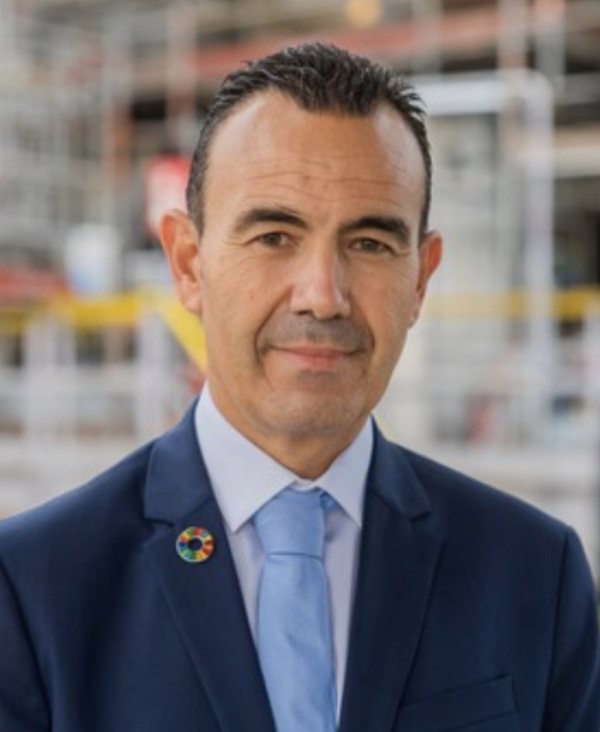
Rafael Cayuela
Economist and strategist. Former Corporate Chief Economist and EMEAI Chief Strategy & Sustainability Officer of The Dow Chemical Company, based in Zürich.
Chair, Insights Committee
Member of the Officers Council.
View on worldenergy.org ↗Chair, Industry Advisory Panel
Chairs the panel that brings industry's view to the Energy Charter.
One of the “50 Leading Tech Voices”
Recognised by the EPO among fifty leading voices on technology and innovation, for the 50th anniversary of the European Patent Convention.
View on epo.org ↗The Future of the Chemical Industry by 2050
Long-range scenarios for the global chemical industry.
View on Wiley ↗The Chemical Industry Under 4IR
How the Fourth Industrial Revolution reshapes chemicals and materials.
Start a conversation
Advisory work, board roles, keynotes, lab access, the Outlook and media: rcv@materialtechnoeconomics.com.
Or use the form below.